Cathodic Protection Network
International

The railway crossing at ICCPS 6 was examined due to the proximity of the groundbed.
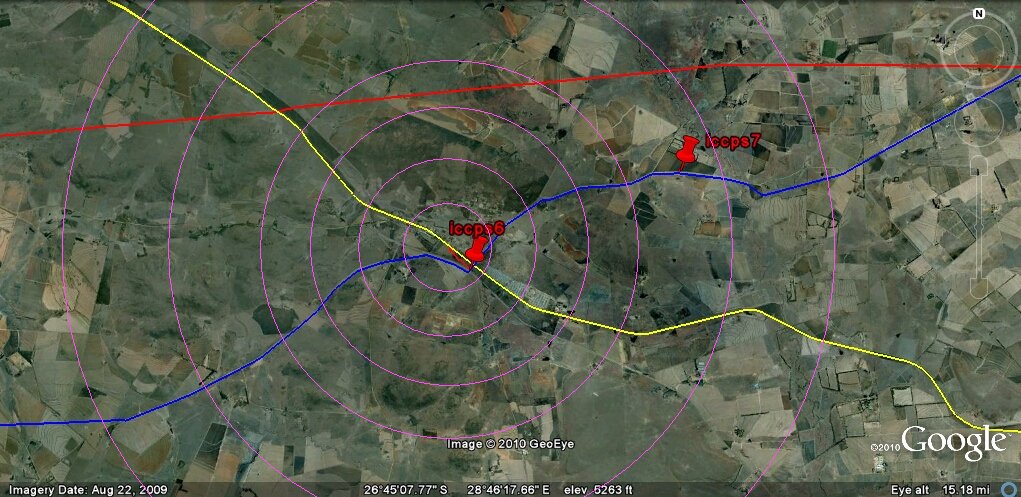
The drawings show the groundbed running parallel to the railway in a cultivated field which we visited and viewed the area between the groundbed and the railway.
This will charge the pipeline and might cause it to discharge into ground of a lower potential in other locations as there is no resistance in the pipeline metal itself. Corrosion will happen where current passes from the metal into the ground.
As a first step in analysing this possibility we carried out a ground to ground voltage measurement for 31 minutes while four trains were passing.
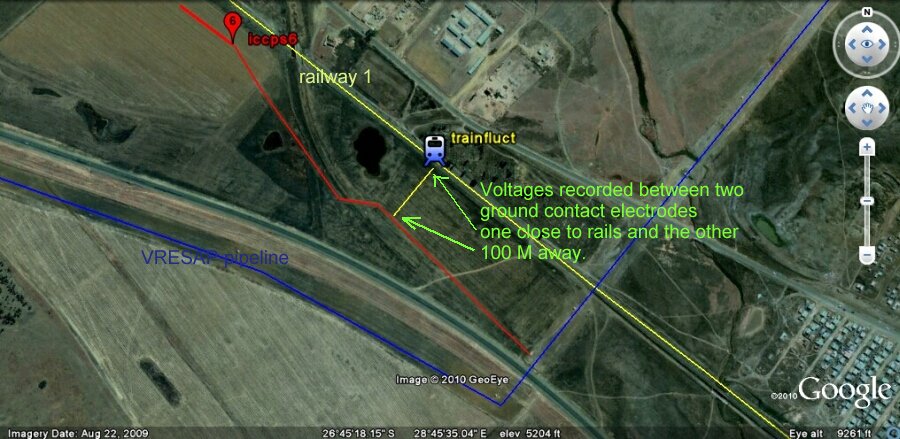
We placed one half-cell on the railway embankment and another 100m at 90 degrees to the railway and recorded the voltages at 2 second intervals.
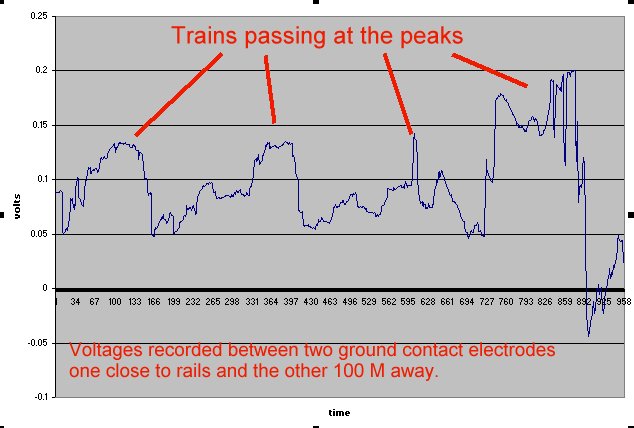
It can be seen that there is an exchange of DC charges when trains pass and that there is a voltage in the ground due to the presence of the railway line itself.
The graph shows that the voltage between 'remote earth' and 'railway influenced earth' averages 0.07 volts. This voltage was measured midway between the groundbed and the pipeline crossing.
It would be informative to carry out a ground potential grid survey in this area to define the extent of the immediate area of influence. If it shows that this overlaps the pipeline then it will distribute the charges to the nearest coating faults at the pipeline/railway crossing.
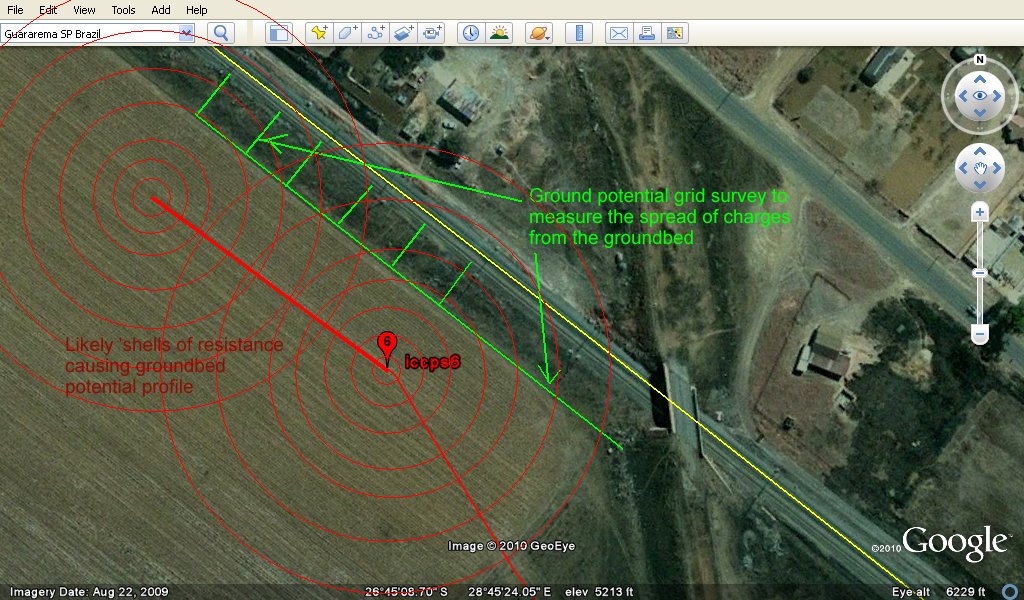
Andre has been trained to carry out this type of survey and shown this particular location. He will need a data-logger, two half-cells, and a laptop computer as well as the stuff that I have bought. The data logger and half cells we are using are the property of Integrity South Africa on loan in return for training and advisory services rendered earlier this year.
Back to the front page